
The Design Icon That Started as a War-Time Leg Splint
Before they defined modern living rooms, Charles and Ray Eames were working out how to support the human body under pressure.

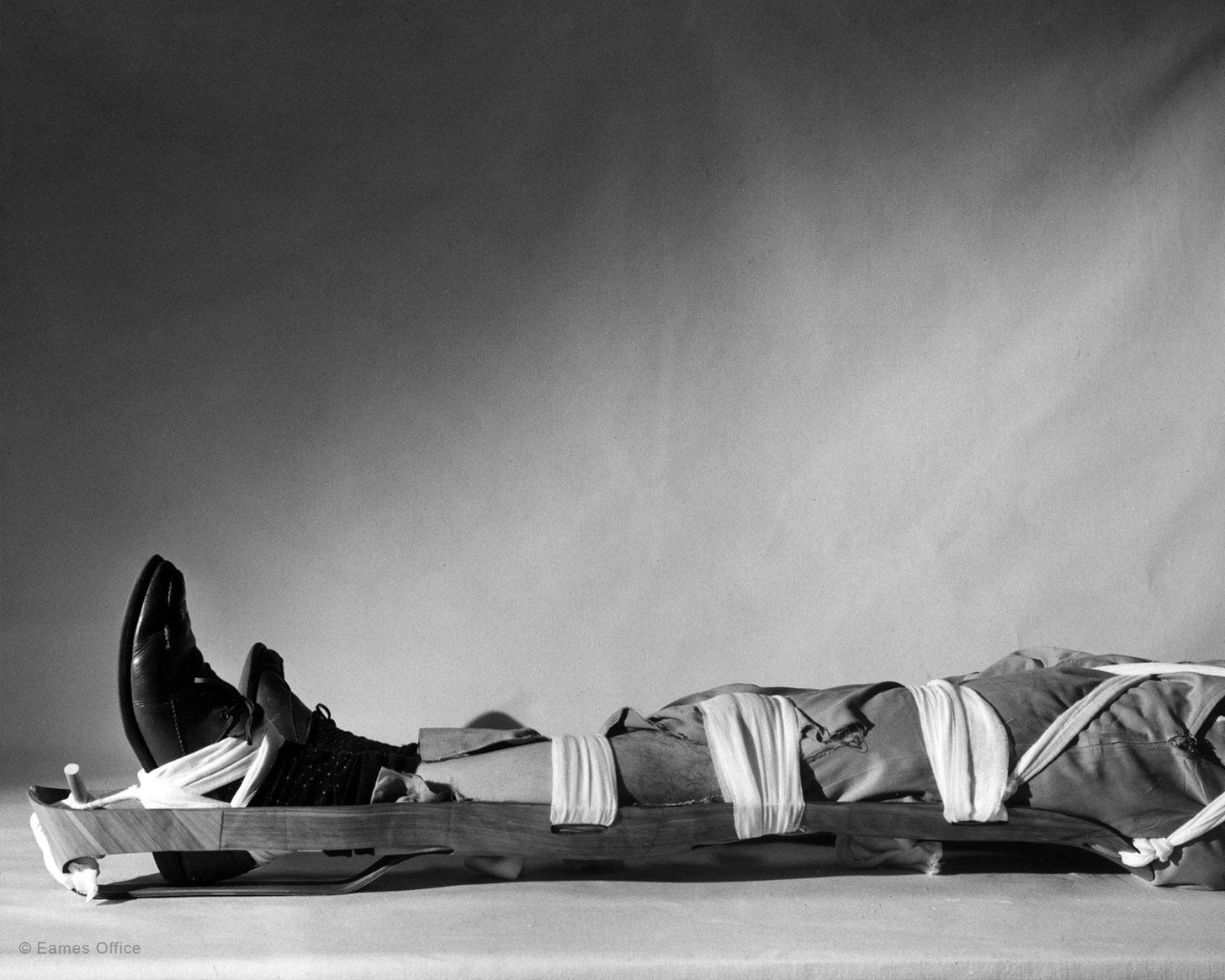
Before the lounge chair, before the ottoman, before anyone thought of “mid-century modern”, Charles & Ray Eames were working on something very different – Plywood, bent and pressed into splints, designed to hold injured soldiers’ legs.
The brief was precise: make it strong, make it light, make it protect the body…and make thousands of them.
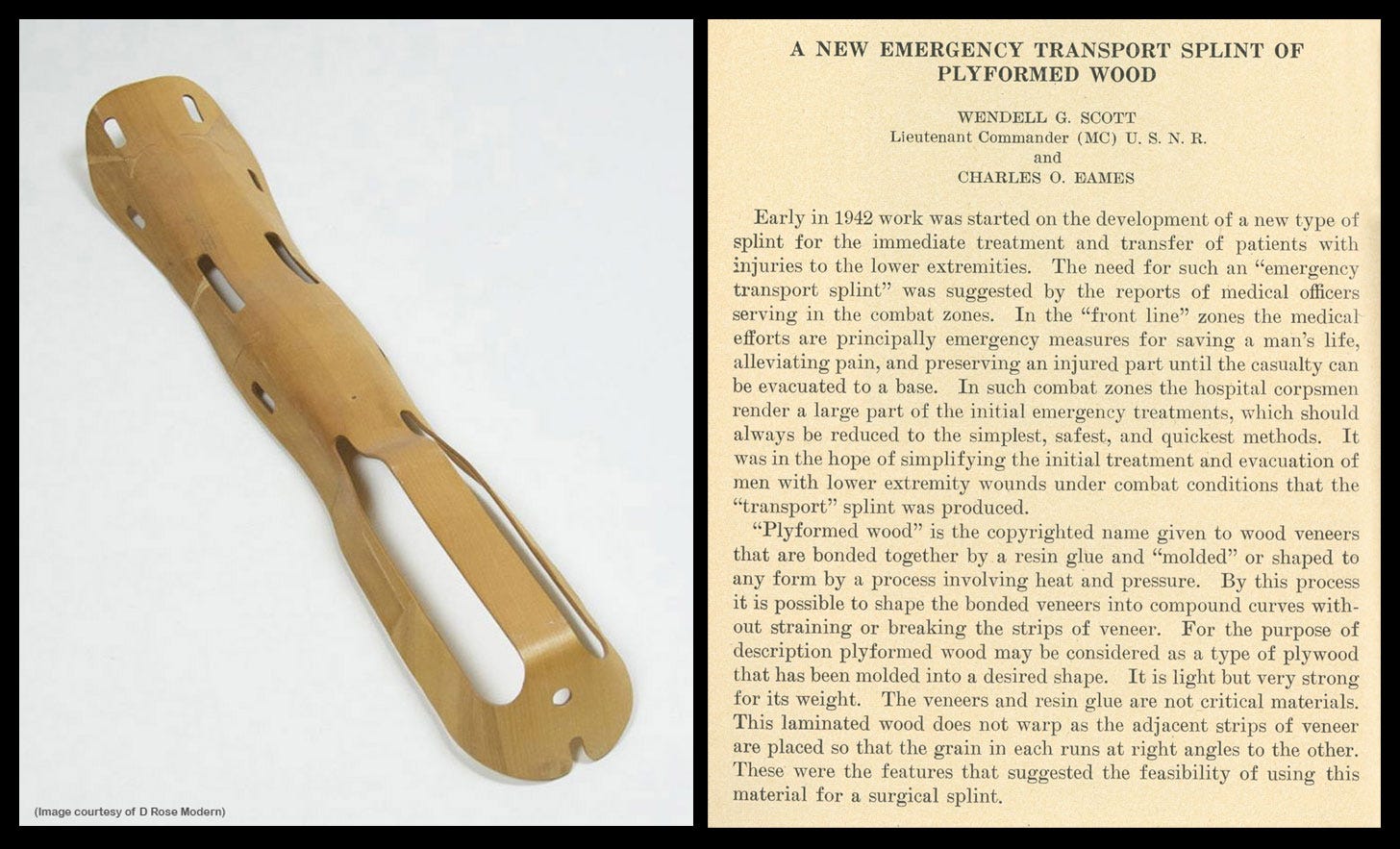
Plywood at the time was stubborn. Flat, rigid, and resistant. The Eameses had to coax it into bending, not in a simple arc, but along compound curves that would follow the human form. Heat, pressure, and patience – everything had to work together. They weren’t just making furniture; they were shaping wood to meet the body in ways it never had before.
What they arrived at was a new logic of form. Wood that was structurally sound and anatomically aware. Pieces that were engineered to hold, support, and flex with precision.
After the war, the context changed, but the process didn’t. The same techniques were redirected into peacetime life. The question shifted from how to stabilise a leg to how to support a person at rest.
The answer became the Eames Moulded Plywood Chair.
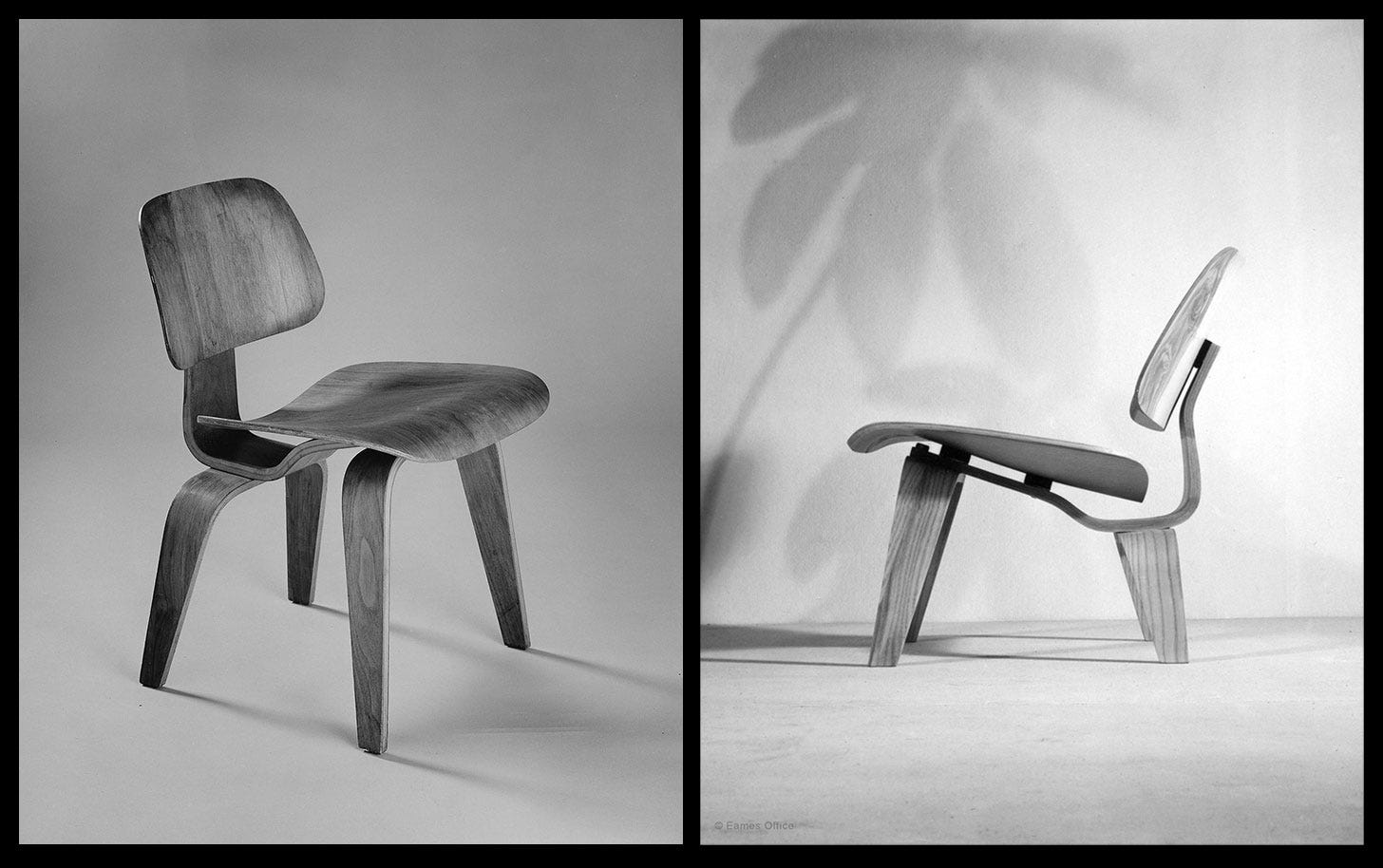
Look closely, and the connection is obvious. Separate moulded panels. Curves that cradle the body. The visual lightness of the object. Everything that had once been about medical necessity now defines a domestic classic.
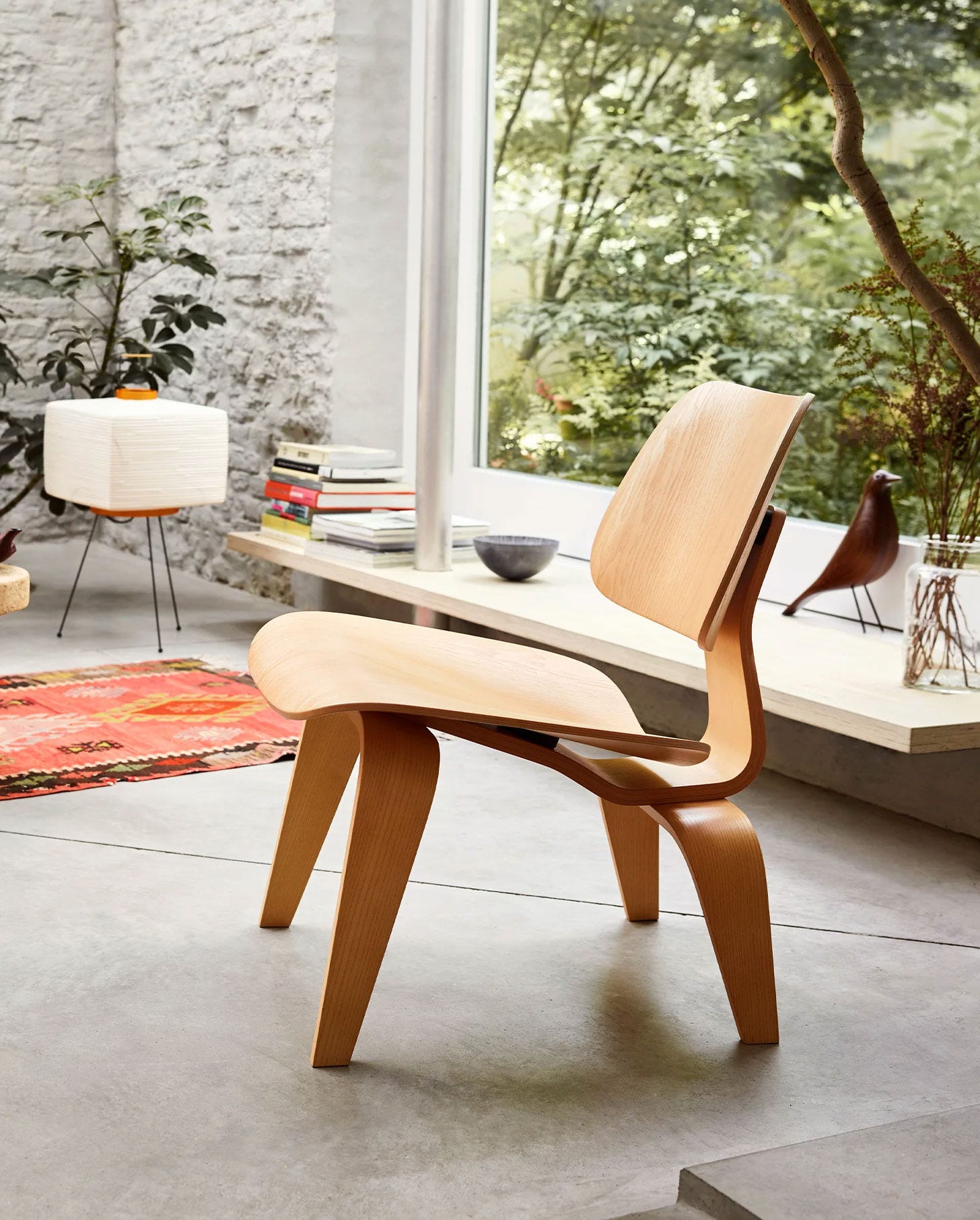
Often called the LCW (Lounge Chair Wood), it sits low, with quiet confidence. No excess. Every curve has a purpose. Every element does something. Sit down and it holds you. Not softly, not rigidly, but just so.
It also sits beautifully at the intersection of furniture and art. Not because it’s expressive, but because the idea behind it is clear. The separation of components. The logic of their connections. The way the chair meets the body. You can read it. You can understand it.
It works because it was developed to work. Functional elegance that happens to be timeless. The technique and care that made it suitable for soldiers now makes it comfortable, beautiful, and enduring in everyday life.
There’s a familiar pattern here. Developments made under pressure rarely stay confined to their original purpose. The techniques, the ideas, the care – they migrate, adapt, and endure.
A chair shaped by constraint, softened into something you can live with. Every curve, every panel, every detail carries that lineage. And that is why it still feels inevitable, nearly a century later.